Skin booster

Glass-skin hydration injections

Micro-injections of hyaluronic acid or polynucleotide (Rejuran-type) are placed just under the surface to improve hydration, texture and glow. Small red dots and slight bumps are normal and usually settle within 1–2 days. A course of sessions gives a fuller effect than a single visit.

Downtime
1–2 days
Minimum stay
2 days
Sessions
1
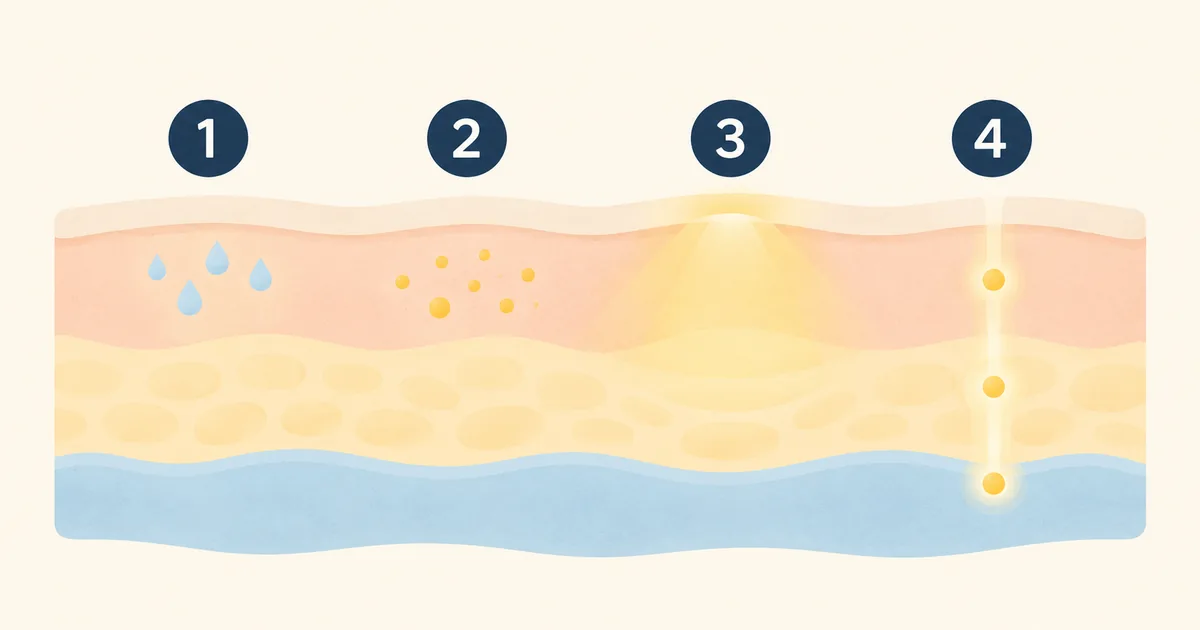
Four soft bands of skin seen in cross-section, with four numbered markers showing the depth each treatment reaches: two injectables in the dermis, a radiofrequency glow spreading through the dermis into the fat, and focused ultrasound points down to the SMAS layer.
  1. Rejuran (polynucleotide, PN). Fine injections into the dermis, the skin's own living layer.
  2. Juvelook (PDLLA + hyaluronic acid). Injected into the deep dermis or just beneath it; tiny particles prompt your own collagen over the following weeks.
  3. Thermage (monopolar radiofrequency). Heat delivered through the surface, spreading through the deep dermis into the fibrous strands of the fat beneath.
  4. Ulthera (micro-focused ultrasound, MFU-V). Ultrasound focused to points at set depths (1.5, 3.0 and 4.5 mm), reaching the SMAS, the layer surgeons lift in a facelift.

Bands from the top: epidermis, dermis, fat, SMAS. Schematic, not to scale.

Estimated price range

KRW 100,000 – 400,000 · per session

≈ USD 74 – 297

Varies by clinic and your condition. The final price is confirmed after consultation.

Converted at a fixed rate as of 2026-09-11

Types and indicative prices

Many operations combine two or more of these. Prices are indicative ranges from Seoul clinics; the surgeon recommends a plan and the clinic quotes it after consultation.

  • Rejuran (polynucleotide)

    Polynucleotide (PN) from salmon DNA, injected in many tiny points for elasticity, texture and a tired look. Small bumps settle in 1–3 days. Usually a course of about 3 sessions 4 weeks apart; tell the doctor about any fish allergy.

    Indicative price
    KRW 150,000 – 350,000 · 2cc, per session≈ USD 111 – 260
    Downtime
    1–3 days
  • Hyaluronic acid booster (water-glow, 물광)

    Non-crosslinked or lightly crosslinked hyaluronic acid placed just under the surface for hydration and a dewy look. The most affordable booster; a course of 2–3 sessions about 4 weeks apart keeps the effect for several months.

    Indicative price
    KRW 60,000 – 250,000 · per session≈ USD 45 – 186
    Downtime
    1–2 days
  • Exosome care

    Exosome products are registered in Korea as cosmetics, not as medicines, so clinics usually apply them to the skin right after microneedling or a laser to calm and support recovery. Treat it as an add-on rather than a stand-alone injection.

    Indicative price
    KRW 150,000 – 350,000 · per session≈ USD 111 – 260
    Downtime
    0–2 days
  • Re2O (human dermal matrix booster)

    A Korean booster launched in late 2024, made from donated human skin with the cells removed, leaving the collagen matrix. It is supplied as human tissue rather than as an approved medical device, and published clinical data are still limited. Swelling or bumps for 1–3 days; usually 1–3 sessions about 4 weeks apart.

    Indicative price
    KRW 350,000 – 900,000 · per session≈ USD 260 – 669
    Downtime
    1–3 days

Good to know

  • Expect small red dots and mild swelling for 1–2 days, so plan around photos.
  • No makeup for about 24 hours, and no sauna or swimming for 2 days.
  • Avoid alcohol and blood-thinning supplements for 24 hours beforehand.
  • Use sunscreen daily; treated skin is more sun-sensitive for about a week.

Questions

How many sessions do I need?

A course of 3 sessions 2–4 weeks apart is typical, though a single session during one trip is still worthwhile.

Is it painful?

Numbing cream is applied first and most people describe repeated small pricks. Sensitivity differs from person to person.

How soon does the glow show?

Skin usually looks smoother from about a week, once the injection marks have faded.

Rejuran or hyaluronic acid?

They target different things: repair versus hydration. Your doctor matches one to your skin at consultation.

Related guides

Skin