
Treatment guide · Compare
Rejuran vs Ulthera vs Thermage vs Juvelook: what each one does
These four names come up in almost every Seoul skin consultation, and they are often sold as a set. They are not interchangeable. Two are injectables that improve the skin itself (Rejuran, Juvelook) and two are energy devices that tighten and lift (Ulthera, Thermage). The quickest way to tell them apart is the depth each one works at.
Facts checked:
Four treatments, four depths
Rejuran is a polynucleotide (PN) skin booster made from salmon DNA, injected in many tiny points to improve hydration, elasticity and texture. Juvelook combines PDLLA (poly-D,L-lactic acid) microspheres with hyaluronic acid; the particles stimulate your own collagen gradually, so it works on fine lines, texture and scars rather than adding instant volume.
Ulthera (Ultherapy) delivers micro-focused ultrasound with real-time imaging, so the practitioner can see the layers while placing energy at 1.5, 3.0 and 4.5 mm. In the US it is FDA-cleared to lift the brow and the skin under the chin and on the neck, and to improve lines on the chest. Thermage FLX uses monopolar radiofrequency to heat a broader zone of the dermis and the tissue beneath it, cleared by the FDA for wrinkles including around the eyes.
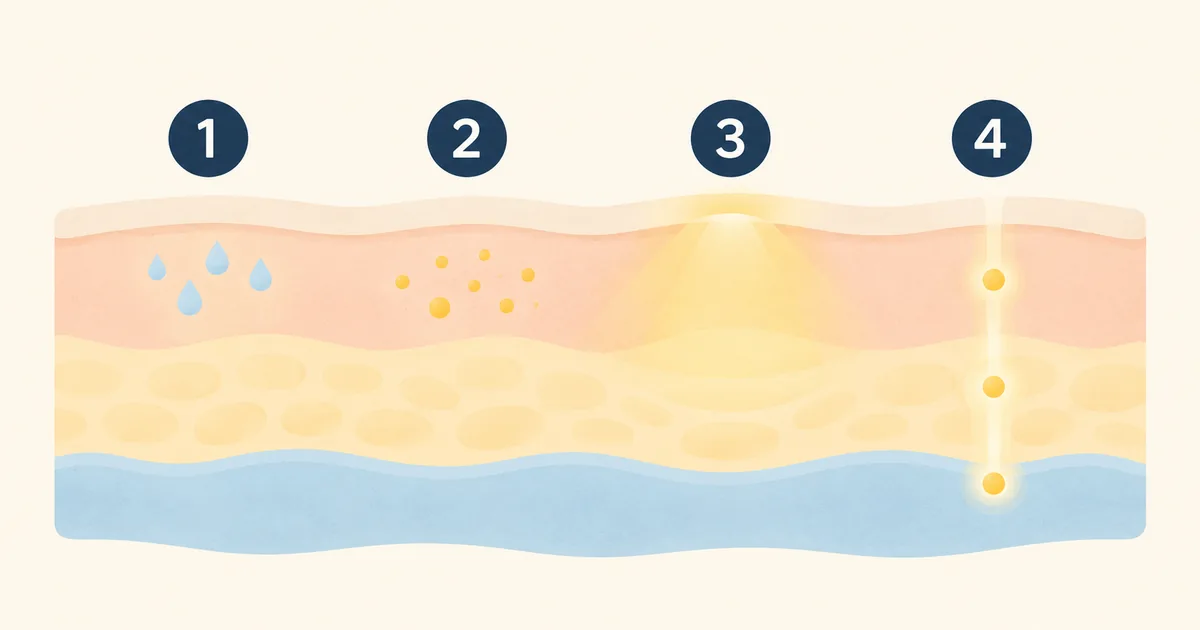
- Rejuran (polynucleotide, PN). Fine injections into the dermis, the skin's own living layer.
- Juvelook (PDLLA + hyaluronic acid). Injected into the deep dermis or just beneath it; tiny particles prompt your own collagen over the following weeks.
- Thermage (monopolar radiofrequency). Heat delivered through the surface, spreading through the deep dermis into the fibrous strands of the fat beneath.
- Ulthera (micro-focused ultrasound, MFU-V). Ultrasound focused to points at set depths (1.5, 3.0 and 4.5 mm), reaching the SMAS, the layer surgeons lift in a facelift.
Bands from the top: epidermis, dermis, fat, SMAS. Schematic, not to scale.
Side by side
| Rejuran | Juvelook | Thermage FLX | Ulthera | |
|---|---|---|---|---|
| Type | Injectable skin booster (PN) | Injectable collagen stimulator (PDLLA + HA) | Energy device: monopolar radiofrequency | Energy device: micro-focused ultrasound with imaging |
| Works at | Dermis | Deep dermis or just beneath the skin | Deep dermis into the fibrous septae of the fat | Superficial skin down to the SMAS (1.5–4.5 mm) |
| Best for | Hydration, elasticity, texture, fine lines, a tired look | Fine lines, texture, pores, acne scars | Mild laxity, crepey skin, texture, eyelid area | Mild to moderate sagging of brow, jaw, under-chin and neck |
| How it feels | Many small pricks; numbing cream first | Varies with area; numbing cream or local anaesthetic | Short bursts of heat, then cooling and vibration | Deep heat or tingling with each line; moderate on average |
| Downtime | Small bumps settle in 24–48 hours; redness or swelling usually 1–3 days, up to about a week | Temporary redness, swelling or bruising | Redness about 24 hours; swelling about 5 days | Usually none; redness for hours, tenderness up to 2 weeks |
| Sessions | About 3 sessions, 2–4 weeks apart, then maintenance | 3 sessions, about 6 weeks apart | 1 session (30–60 min) | 1 session |
| Results | Build over the course; typically reported to last about 6–12 months | Build over several weeks; shown to 6 months in trials, clinics report 12–24 months | Improve over 2–6 months; about 1–2 years | Build over 2–3 months; up to a year or more |
| In our catalog | Skin booster | Juvelook | Thermage | Ultherapy |
Who each one suits
- Rejuran. Skin that looks dull, dehydrated or thin, and anyone who wants a glow with almost no downtime. Not suitable with allergic or autoimmune conditions, blood-thinning medication, recent filler in the area, or during pregnancy or breastfeeding. It is made from salmon DNA, so tell your doctor about any fish allergy.
- Juvelook. Fine lines, uneven texture, enlarged pores and acne scars, for people willing to commit to a course and wait for collagen to build. A one-visit trip only starts the course. Not used in pregnancy or breastfeeding, with severe allergies, skin infection at the site, weakened immunity, clotting problems, permanent facial implants or keloids, and not around the eyes or lips.
- Thermage. Early laxity and crepey texture, including the eyelid area, with a single session. Not for anyone with a pacemaker, defibrillator or other electrical implant.
- Ulthera. Mild to moderate sagging along the brow, jaw and neck; the maker describes typical candidates as starting in their 30s. Not a replacement for a surgical facelift, and not placed over metal implants or fresh filler.
None of these is a fit for active infection, open wounds or severe acne in the area. Tell the doctor about pregnancy, fillers, implants and any medication.
Ulthera or Thermage?
They are often presented as rivals. A randomised split-face trial that gave each patient Ulthera on one side and Thermage on the other found no significant difference in laxity scores, satisfaction or side effects over six months. In practice the choice comes down to where the laxity sits (Ulthera reaches deeper, Thermage covers a broad area and the eyelids), how much heat you tolerate, and your doctor's assessment.
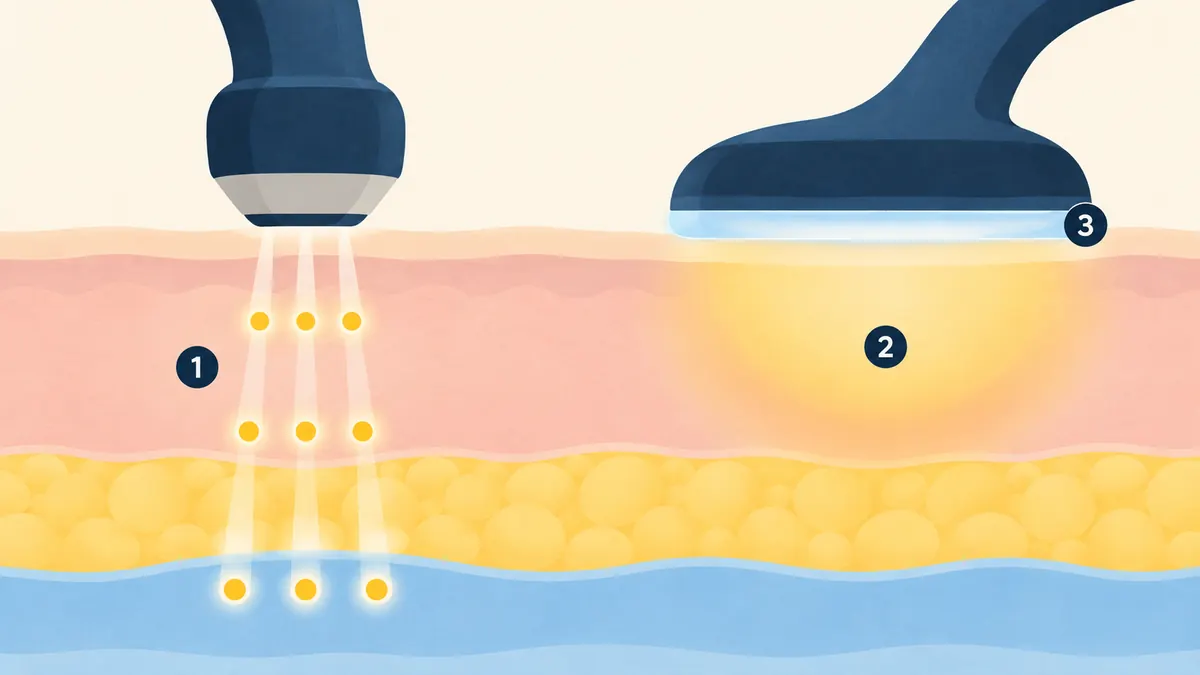
- Ulthera: focused points. Ultrasound is focused to tiny points at set depths (1.5, 3.0 and 4.5 mm), placed in lines while the practitioner watches a live image of the layers.
- Thermage: broad heat. Radiofrequency warms a wider zone of the deep dermis and the fibrous strands of the fat beneath.
- Surface cooling. Thermage cools the skin surface (and adds vibration) while it heats underneath, which is why it is felt as short bursts of heat.
Schematic, not to scale.
Common combinations
- Ulthera + Thermage on the same visit: deep lifting plus surface tightening, a popular Seoul pairing.
- An energy device + an injectable (for example Ulthera or Thermage with Rejuran or Juvelook): a Korean review of 1,040 patients over 18 years found low complication rates when devices were combined with toxin, hyaluronic acid or collagen-stimulating fillers.
- Rejuran + hyaluronic acid boosters: polynucleotides are often paired with HA for hydration.
The order and spacing on the day are your doctor's call. Energy treatments are usually done before injections in the same area.
Planning it into a trip
Ulthera and Thermage are single sessions with little or no downtime, so they fit even a short stay. Rejuran and Juvelook work best as a course; plan the first session in Seoul and ask the clinic whether the next ones can be timed to a return visit. Flying the next day is generally fine after these non-surgical treatments; take a fragrance-free moisturiser for the dry cabin air. See Flying home after treatment.
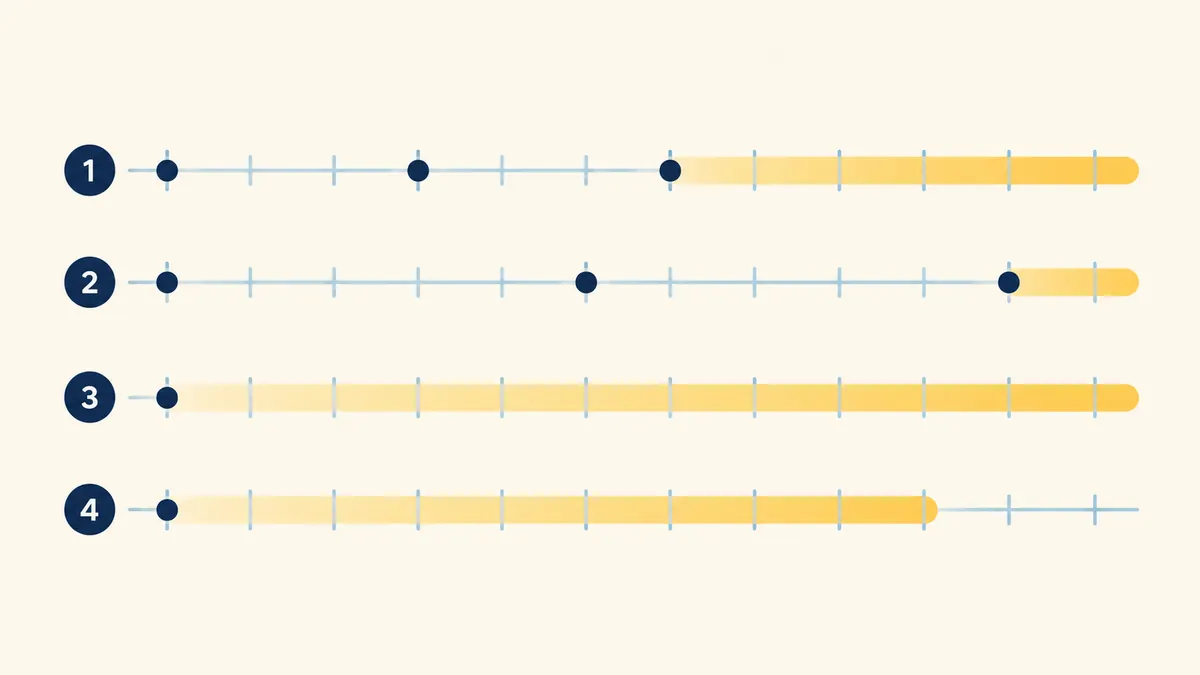
- Rejuran. About 3 sessions, 2–4 weeks apart. Results build over the course and typically last about 6–12 months.
- Juvelook. 3 sessions about 6 weeks apart. Your own collagen builds over several weeks.
- Thermage. One session. Improvement builds over 2–6 months.
- Ulthera. One session. Results build over 2–3 months.
Each tick is about a week. Dots are sessions; the yellow bar is the period when results build. Schematic.
Considering one of these? Tell us your dates and we will plan the clinic visits around them.
Sources
- Ultherapy: Frequently Asked Questions
- Ulthera System Instructions for Use (1015107IFU Rev 05)
- Pan-Asian consensus on micro-focused ultrasound with visualization (2021)
- Micro-focused ultrasound with visualization: systematic review and meta-analysis (2025)
- Thermage FLX: official site and Important Safety Information
- 510(k) K170758: Thermage FLX System
- Monopolar radiofrequency treatment for facial laxity: histometric analysis (2020)
- The landscape of radiofrequency technology for skin rejuvenation (2025)
- Monopolar radiofrequency vs micro-focused ultrasound: randomised split-face trial (2019)
- 18-year safety of MFU and monopolar RF combined with injectables (2025)
- Expert perspectives: evidence-based applications of polynucleotides (2026)
- Rejuran: medical device approval 제허14-825호, instructions and precautions
- Juvelook: medical device approval 제허17-972호, instructions and precautions
- Polynucleotide injection for skin rejuvenation: randomised controlled trial (2022)
- Rejuran healer: sessions, downtime and results
- Rejuran skin booster
- Bringing K-Aesthetics to Australia (Rejuran)
- Juvelook
- Juvelook (PDLLA)
- Juvelook: product information
- Juvelook: FAQ
- PDLLA-HA for nasolabial folds (2026)
- Split-face RCT of a PDLLA product vs PLLA (2026)
This guide summarises published guidance so you can plan and ask better questions. It is not medical advice. Your doctor assesses you in person and makes every treatment decision, including when you are fit to fly.
All treatment guides